


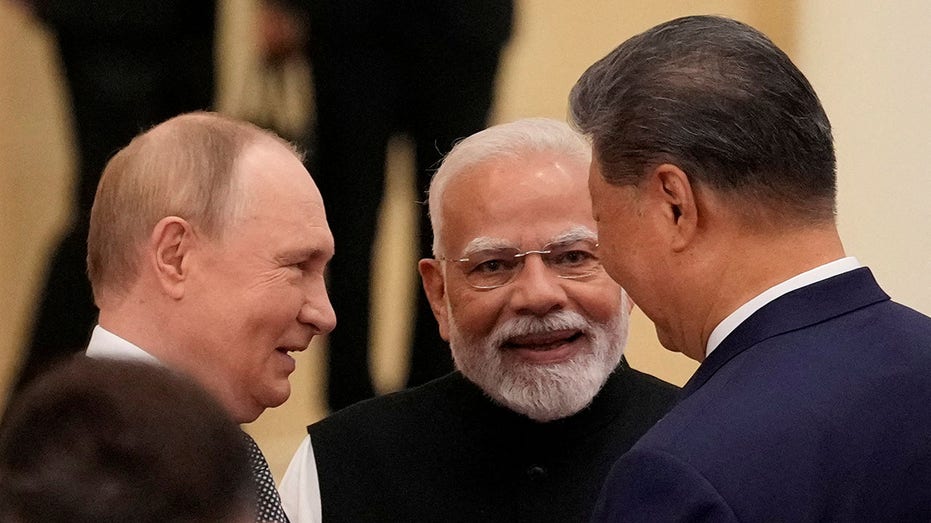
This week’s show of unity between Russian President Vladimir Putin and Indian Prime Minister Narendra Modi during Putin’s visit to India comes as Indian refiners continue buying discounted Russian crude and exporting refined fuel into Europe — a flow that Ukrainian officials say is weakening the impact of Western sanctions aimed at constraining Moscow’s wartime revenue.
As their meetings concluded, Modi said the two leaders “Agreed on the economic cooperation program until 2030 with the aim of diversifying our trade and investment ties,” adding that they discussed strengthening cooperation in shipbuilding, capacity development, energy, critical minerals, and more.
Sergei Aleksashenko, former deputy minister of finance of Russia and former deputy governor of the Russian central bank, now living in exile in the United States, told FOX Business that the structure of the global oil market makes Russian supply difficult to remove without triggering major price spikes worldwide.
Aleksashenko said “the biggest mistake is to believe that Russian oil has only one destination,” describing the crude market as global and highly flexible. He estimated that Russia accounts for “15 to 17%” of internationally traded oil and warned that removing that supply could push prices to “$120, $150, $200 per barrel.” He added that, in his view, “the price of real sanctions, the price of leaving the world without Russian oil, is too high” for Western governments.
TRUMP FINDS NEW LEVERAGE IN UKRAINE FIGHT WITH TOMAHAWK THREAT AND LONG-RANGE STRIKE AUTHORIZATION
Recent trade data aligns with the broader pattern Aleksashenko describes. Bloomberg reported that Russia’s flagship Urals grade has been offered to Indian refiners at discounts of up to seven dollars per barrel to Dated Brent after new U.S. sanctions disrupted existing supply channels. Reuters has also reported that Indian refiners are exploring purchases from non-sanctioned Russian sellers at these lower prices.
Ukrainian lawmaker Oleksii Honcharenko told FOX Business that the flow of Russian crude into India, followed by exports of refined products from India to Europe, undermines the effectiveness of sanctions designed to restrict Moscow’s revenue. “From my general knowledge, what India is doing, they’re buying Russian oil. They make from it oil products… and then they sell it… to the European Union too,” he said. Honcharenko claimed that Indian oil purchases from Russia had risen “ten times or even more” since the full-scale invasion, and he argued that this “helps a lot for Russia to continue the war.”
TRUMP SAYS HE’S RUNNING OUT OF PATIENCE WITH PUTIN ‘FAST’ OVER UKRAINE CONFLICT NEGOTIATIONS

Honcharenko also said he believed efforts by President Trump to press India on its Russian oil purchases were justified. Trump said in October, according to Reuters, that Prime Minister Narendra Modi assured him India “will not be buying oil from Russia.” Indian officials have not confirmed that pledge, and analysts told Reuters that any changes in India’s buying patterns could shift Russian crude into more opaque trading channels.
The continued trade highlights the limits of Western sanctions. Indian refiners have shifted away from sanctioned Russian suppliers such as Rosneft and Lukoil, Reuters has reported, but have shown renewed interest in purchasing from non-sanctioned entities as discounts widened. Europe, meanwhile, remains a major importer of Indian diesel — demand that analysts say would collapse if Russian-origin crude were fully excluded from the market.
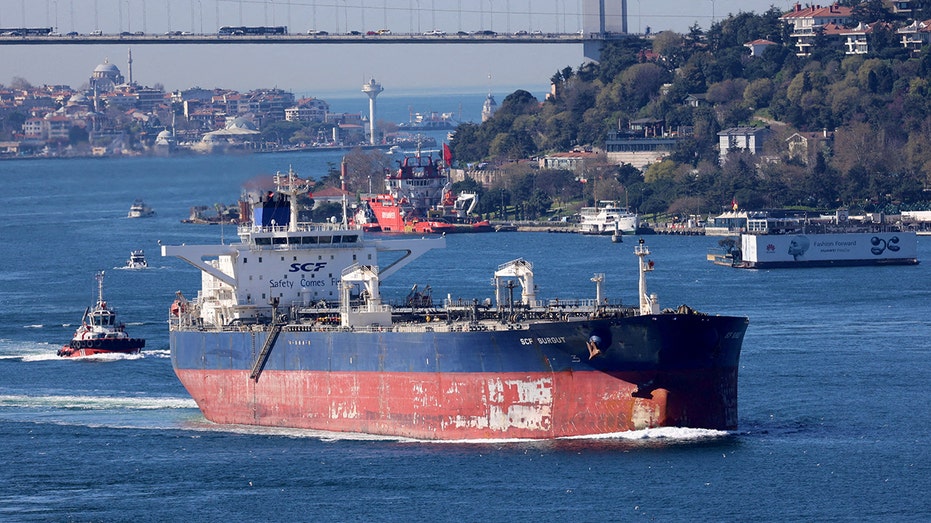
Aleksashenko said Europe’s dependence on these flows is structural. “If Europe doesn’t want to purchase petroleum products produced out of Russian oil, they should shut down Turkish refineries and Indian refineries,” he said. “They don’t do it… otherwise they have no refined products. It is the collapse of the economy.”
The issue is now part of a broader debate in Kyiv over a possible peace framework being discussed by the United States and European partners. Honcharenko said he supports negotiations in principle while acknowledging internal disagreement in Kyiv. “My position… is that we need peace as soon as possible,” he said. He described the emerging proposal as “a workable framework,” even though “many people don’t like this package at all.”
CLICK HERE TO DOWNLOAD THE FOX NEWS APP
Honcharenko said he expects some degree of sanctions relief to be included in any eventual agreement, though he opposes softening restrictions. “I think it will be part of any deal, at least some softening of sanctions,” he said. “For me, as Ukrainian, it’s not something I like… more sanctions against Russia and longer better.”
Aleksashenko stressed that the global market’s dependence on Russian commodities — from oil to nickel, palladium, fertilizers and more — creates structural challenges for sanctions. “The whole world is watching this show,” he said, “but it has nothing to do with reality.”
FOX Business reached out to both the Indian and Russian governments for comment but did not receive a response.
Read the full article here