


NEWYou can now listen to Fox News articles!
When Americans sat down to Christmas dinner in 1918, the meal wasn’t just a celebration — it was an act of patriotism.
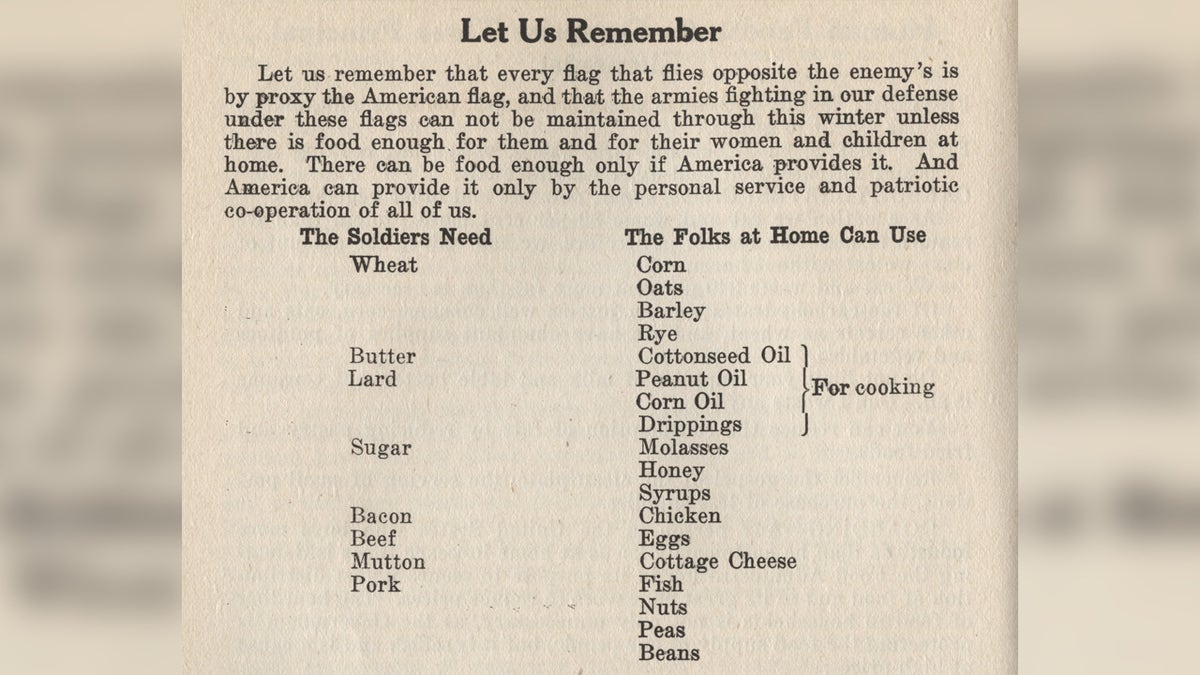
During World War I, the U.S. Food Administration urged households to save wheat, sugar, meat and fats so more food could be shipped to troops overseas — and it backed a cookbook, “Win the War in the Kitchen,” filled with ration-friendly recipes.
Today, the National WWI Museum and Memorial in Kansas City preserves that cookbook through its online exhibit, “War Fare: From the Home Front to the Frontlines.”
7 RETRO SALAD DRESSINGS THAT ONCE RULED AMERICA’S FRIDGES ARE MAKING A COMEBACK
“Everyone must help if we are to win,” the cookbook declared. “Fats are the most precious thing in this war,” it added, noting the Army needed them both to feed soldiers and produce glycerin for explosives.
Even sugar mattered: “Saving that ounce a day is part of YOUR WAR SERVICE.”
The cookbook drew contributions from food companies, American Red Cross dietitians, women’s auxiliaries and magazines of the era — with endorsements from figures like Herbert Hoover, then head of the U.S. Food Administration, and President Woodrow Wilson.
It was driven by patriotism, said Lora Vogt, the museum’s vice president of education and interpretation.
Christmas still called for dishes that felt special.
“Hoover helped lead the nation, not by saying, ‘The government is mandating this,’ but instead, ‘Each of you American families get the opportunity to support our nation and support American ideals by changing how you eat,'” Vogt told Fox News Digital.
LEFTOVER HACKS EXPLODE ON SOCIAL MEDIA AS AMERICANS FIGHT HIGH PRICES WITH SCRAP FOOD FEASTS
While wartime substitutions like carrot coffee, soybean loaf and calls to “make every day a fish day” filled everyday meals, Christmas still called for dishes that felt special.
Below are seven dishes that would have appeared on some 1918 American Christmas tables.
1. Relish tray
Before charcuterie boards dominated social media, the centerpiece of a holiday table was the relish tray, full of pickles, celery, carrots, olives, nuts and fruit. The offerings were inexpensive, relied on preserved foods and required no wheat, meat or sugar.
FROM RETRO TO REFINED: JELL-O SALAD AND SAVORY GELATIN DISHES MAKE UNEXPECTED RETURN
“This was the charcuterie tray before charcuterie trays were the thing,” Vogt said.
2. Maple syrup cake with maple icing
“Americans eat more sugar than other folks do, more than is really good for them,” the cookbook said.
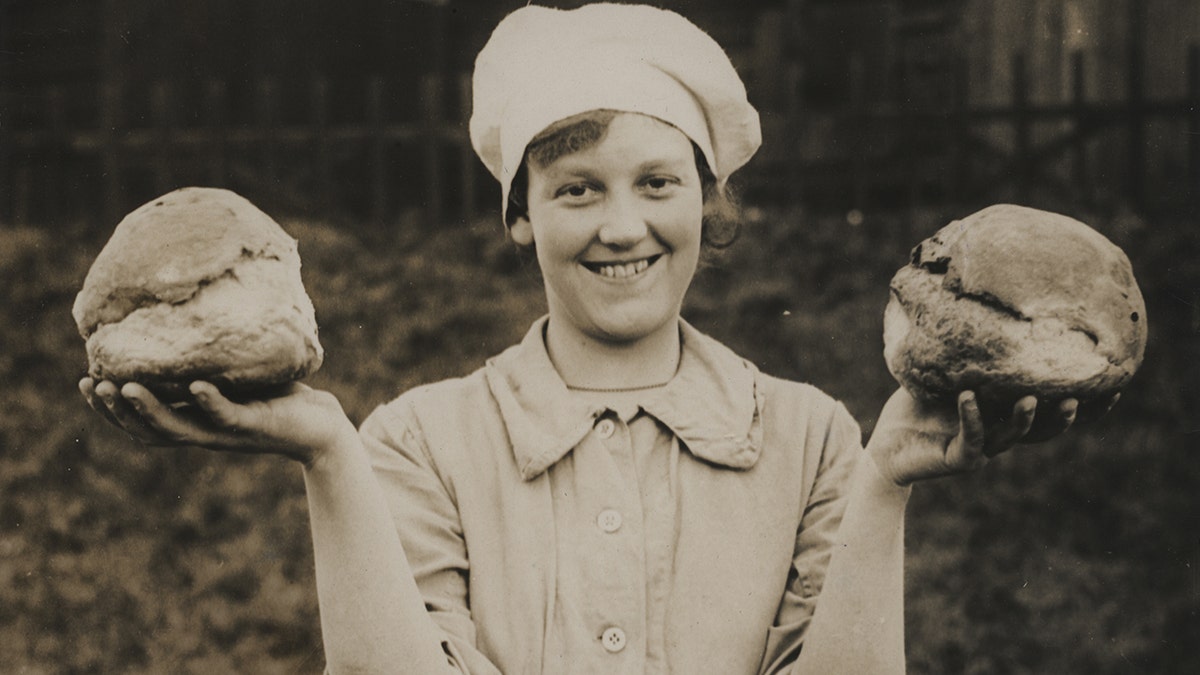
Home cooks were encouraged to skip frostings and instead to sweeten cakes with maple syrup, honey or molasses, making a maple syrup cake with maple icing a festive workaround.
3. Corn fritters
Corn fritters appear in the WWI cookbook as an example of a simple, wheat-saving side.
WHATEVER HAPPENED TO OLIVE LOAF, THE NOSTALGIC 1970S DELI MEAT THAT AMERICA ABANDONED?
“Millions of people get along very well who never taste wheat. It won’t hurt us to do with less wheat,” the book said.
Vogt said the recipe is still a good one today: “If you come home from work one day, and you’re like, ‘I have nothing to cook,’ you can pull that together in no time.”
4. Buckwheat chocolate cake
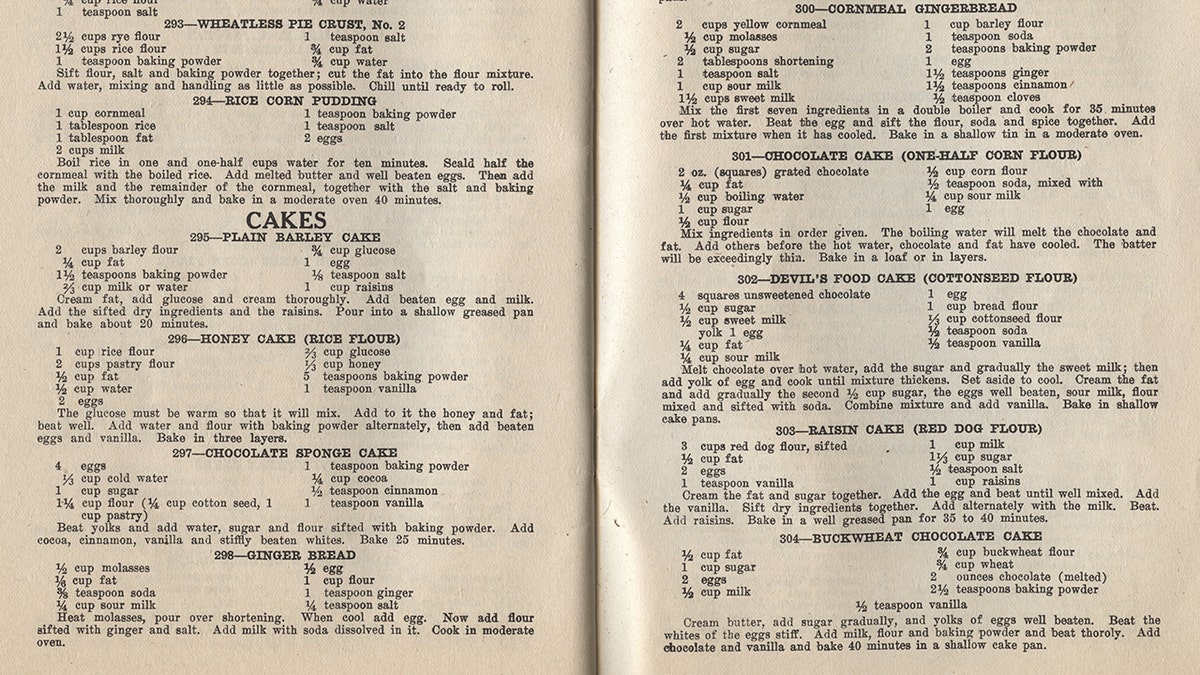
Buckwheat, rye, cornmeal and oatmeal were promoted as alternatives to flour, and the WWI cookbook urged families to rethink how they baked.
TEST YOURSELF WITH OUR LATEST LIFESTYLE QUIZ
The buckwheat chocolate cake offered a real treat while still honoring the conservation message, and Vogt has even made them as muffins.
“I can genuinely attest … they’re solid,” she said.
5. Puritan turkey stuffing
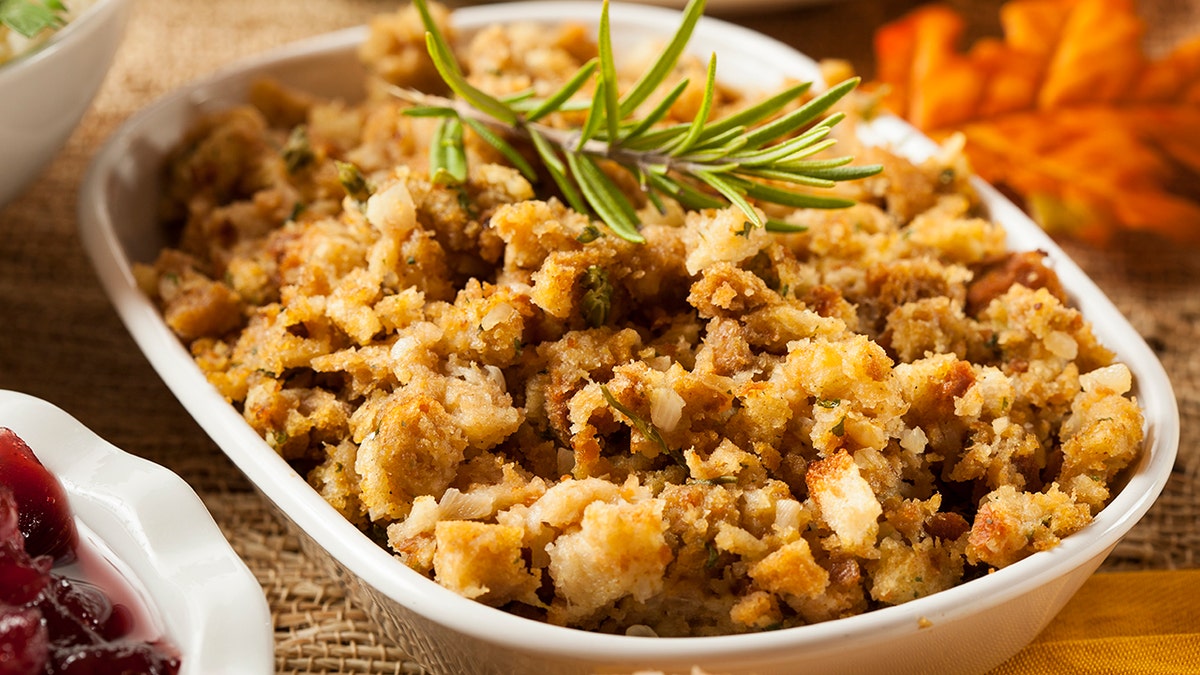
The cookbook’s Puritan stuffing didn’t call for any actual turkey meat — only turkey fat.
Made from cornmeal, oatmeal, stale bread, chopped nuts and turkey drippings, the stuffing was designed to be economical and celebratory.
As Americans prepare to celebrate the nation’s 250th year, the recipes offer a look back at a traditional holiday menu — one with plenty of elements that still feel familiar today, Vogt noted.
6. Meat: possum, tongue and mallard
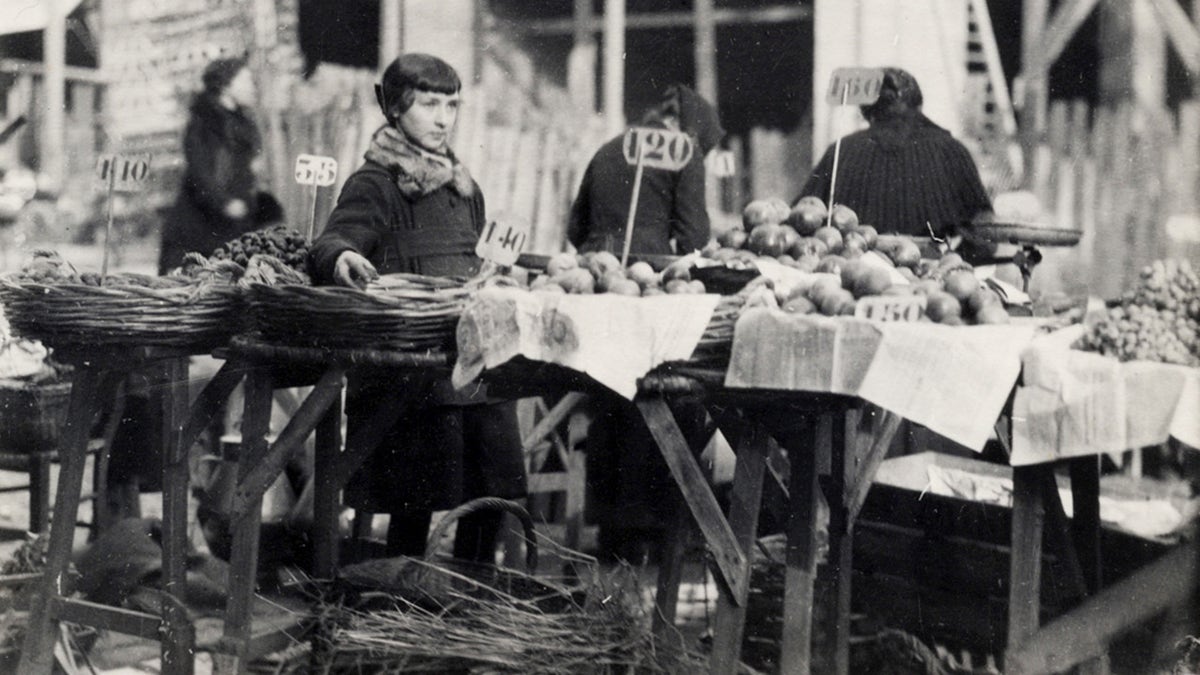
During the WWI era, some meats were more practical, regional and even celebratory.
The cookbook included meats from chicken and turkey to venison, rabbit and squab, while some families served possum, tongue or wild duck.
CLICK HERE FOR MORE LIFESTYLE STORIES
Cookbooks from the early 1900s showed the “beautiful intersection of the fantastic tapestry that is America,” reflected in the meats that appeared on holiday tables as families relied on regional and cultural traditions and made use of every part of the animal, Vogt said.
7. Plum pudding
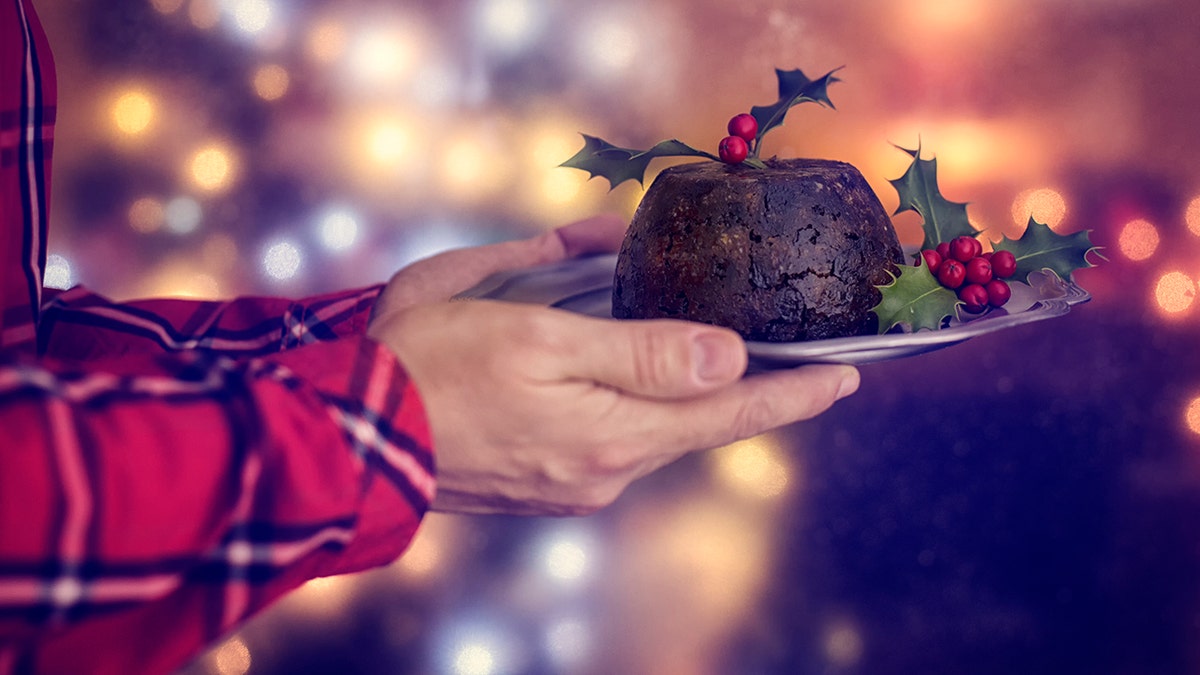
The spirit of the Sugar Plum Fairy still found its way onto WWI tables, as plum pudding remained one of the era’s most beloved Christmas desserts.
Households relied heavily on dried fruits like prunes, raisins and dates.
“While the ingredients and the making of the meal were important, it was about the memories that were made … who you were bringing around the table,” Vogt said.
She added that American soldiers abroad were eating whatever was available overseas — sometimes even snails in Paris and donuts from Salvation Army tents, as one soldier wrote in letters preserved in the museum’s archives.
Read the full article here