


It was a crisp day in January when Riley Gaines stood in front of a divided crowd on the Supreme Court steps.
Right in front of her were her supporters, mostly women dressed in casual or formal clothing, clapping as she spoke. But just to their left stood a horde of pro-transgender activists, some wearing costumes and others partially unclothed, shouting curse words.
“They’re so angry,” Gaines told Fox News Digital of the crowd that day.
“On our side … you saw people smiling and embracing and hugging each other … but you look across the bike racks that were there separating us, and you saw anger, and you saw negativity, and you saw screaming, and you saw vitriol, and you saw colored hair, and you saw colored hair, and you saw piercings, and you saw what I would describe, honestly, just visually looking at it, was island of the misfit toys. Not to be like, mean, but just speaking pretty objectively here.”
SUPREME COURT MAKES RULING ON TRANS ATHLETES IN WOMEN’S SPORTS
Nearly six months after Gaines stood on those steps, the pro-transgender activists now sit on the losing side of the court’s decision. Gaines and her “Save Women’s Sports” activists can look back on that rally, and the obscenities hurled at them while they spoke, as obstacles in a winning fight, after the Supreme Court justices ruled Tuesday to uphold state laws that ban trans athletes from girls’ and women’s sports.
Six years before Gaines stood on those steps — and almost three years before her infamous tie with Lia Thomas — Idaho State cross-country runner Mary Kate Marshall was put in a position that would change her life. In 2019, she and teammate Madison Kenyon competed against a biological male from the University of Montana. The following year, they joined the lawsuit that would reach the Supreme Court.
“I lost every race I ran against this male, and so did a lot of my teammates. And then at a championship, I watched my teammate pushed off the podium,” Marshall told Fox News Digital.
It was 2020. The issue of trans athletes in women’s sports hadn’t become the cultural lightning rod it is today. There was less of a support system for women like Marshall. But she took a leap of faith, signing on as a voluntary defendant to a lawsuit against her state. The lawsuit, filed by former Boise State trans athlete Lindsay Hecox, blocked the state’s law to keep males out of women’s sports.
“Seeing that no parents were standing up, no coaches were saying anything, like, we knew we had to,” Marshall said.
She was joined by her teammate Madison Kenyan. Together with their state, they would suffer a series of courtroom losses over the course of multiple years.
All the while, they dealt with the sacrifices that Gaines and all the other “Save Women’s Sports” activists would have to deal with in a heated political climate.
“It was difficult at first because we were afraid of some of the backlash that we might get, but we had to do the right thing,” Marshall said, adding that interactions with people they were close to became “scary.”
“Teammates that we had on the team just disappointed in us for putting our school’s name out there…
“We had some teammates who were just afraid, um, afraid of going against the norm, and at the time, back in 2020, there, this wasn’t talked about a lot. So people were just scared about what would come of it or getting in trouble.”
Idaho Attorney General Raul Labrador, who was just working as a legal counsel for Alliance Defending Freedom (ADF) at the time, says their decision to join the lawsuit as defendants was essential to getting the case to the Supreme Court years later.
“I think it made all the difference in the world,” Labrador, who became AG in 2023, told Fox News Digital.
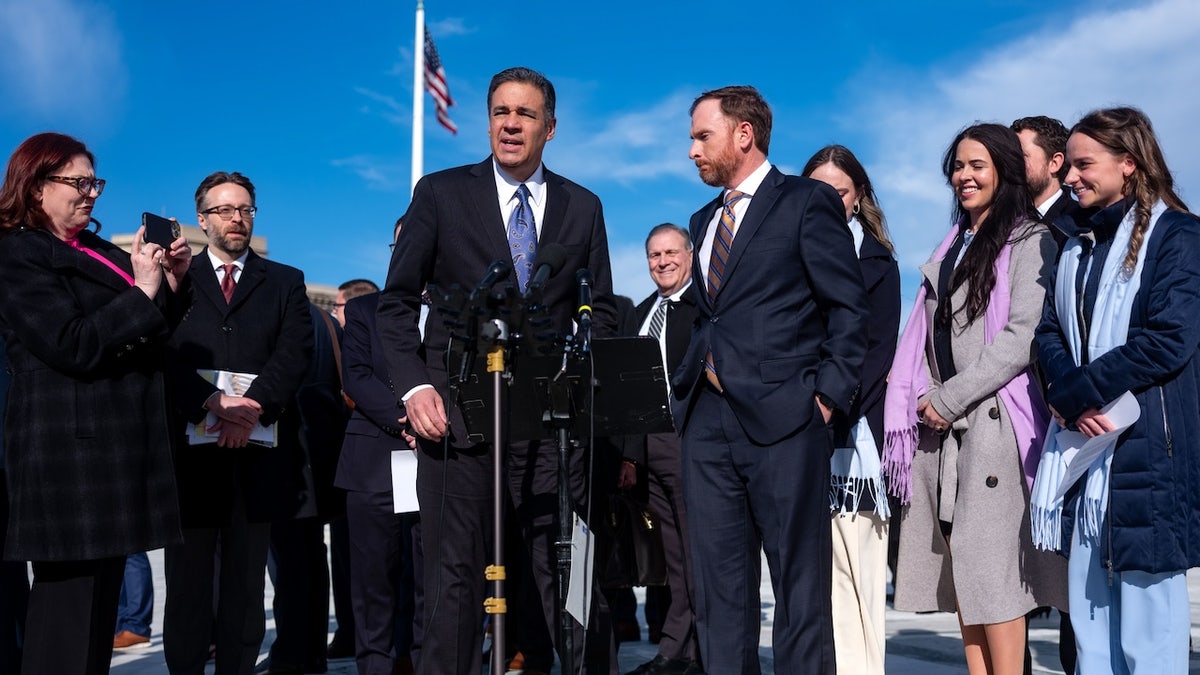
“Their courage and their conviction and their ability and desire to make very unpopular decisions at the time, and to make public stances that jeopardize, you know, their friendships, their ability to participate in sports, maybe in some cases even their abilities to be on the team… their fight was important.”
Then in West Virginia in 2021, a transgender student who was still a minor filed a similar lawsuit after being told, before entering sixth grade, that she could not compete on the girls’ cross-country and track-and-field teams.
The West Virginia case differed from Idaho’s in one crucial way: It did not begin with a college athlete who had tried out for a women’s team. It began with a middle schooler, represented by the ACLU, who argued that West Virginia’s law amounted to a categorical ban. The ACLU said the athlete had taken medication from the onset of puberty and had not experienced the physiological changes associated with male puberty.
The courts initially gave the student room to compete. The district court first blocked enforcement of the law, and the Fourth Circuit later ruled against West Virginia on the Title IX claim while sending the Equal Protection issue back for more fact-finding. It meant that, as the Supreme Court fight dragged on, the athlete continued competing in girls’ sports.
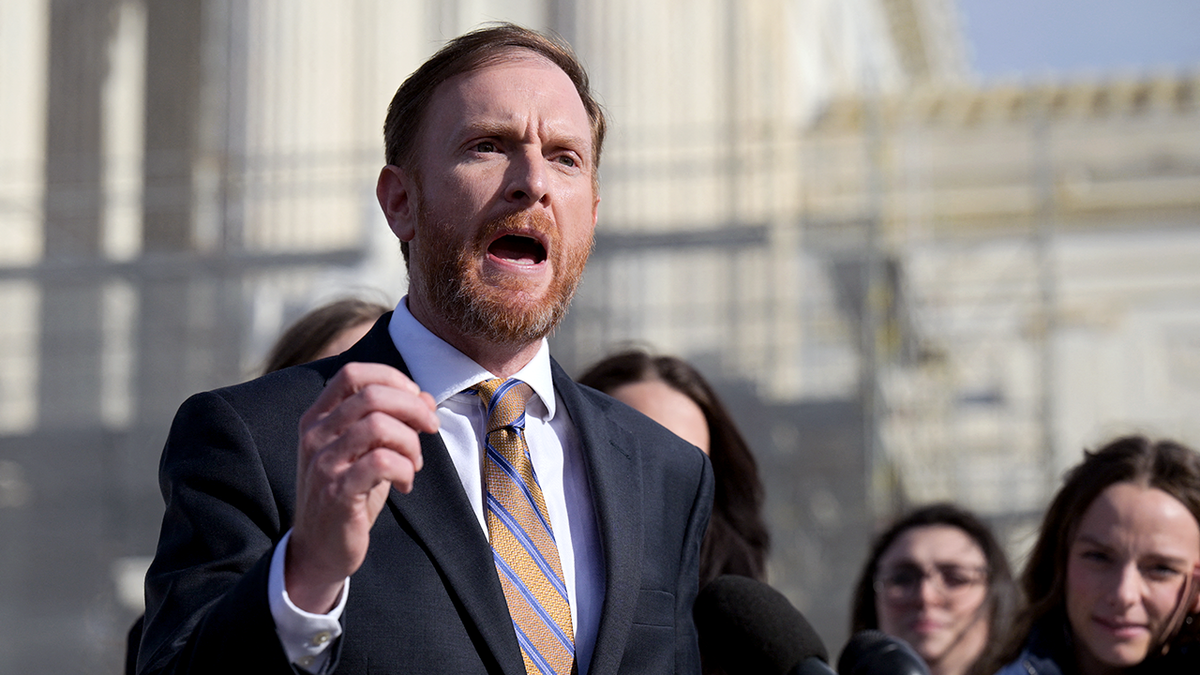
For West Virginia Attorney General JB McCuskey, that was the hardest part.
“The hardest part was getting the phone calls from the girls and the families who were being affected in West Virginia in real time,” McCuskey told Fox News Digital.
“There’s nothing you can do when the Fourth Circuit enjoins your law to overcome that until the Supreme Court decides what the Fourth Circuit did was wrong. And so there was this, what I knew to be an injustice happening in real time, and my hands were really tied.”
But the West Virginia story soon became about more than race times, throws and standings.
In January, Fox News Digital reported that Bridgeport High School student Adaleia Cross, a former track-and-field teammate of the trans athlete at Bridgeport Middle School, had accused the athlete of making graphic sexual comments to her in the girls’ locker room during the 2022-23 school year. Cross said she later quit track at Bridgeport High School to avoid sharing a locker room again once the athlete reached high school.
The ACLU denied the allegations on behalf of the athlete and the athlete’s mother, saying the school district investigated the claim and found it unsubstantiated. ADF, which represents Cross, said Cross had sworn under oath about the alleged incident and argued that she “had to step away from the sport she loved entirely” because of it.
Jim Campbell, chief legal counsel for ADF, pointed to Cross’s alleged experience as one of the human costs behind the legal fight.
“When we reject truth, the harm is real, widespread, and devastating,” Campbell told Fox News Digital.
“Across the country, girls have been losing medals, roster spots, titles, opportunities, and privacy. Consider our client, Adaleia Cross, who’s in the State of West Virginia. Not only did the plaintiff in the West Virginia case take her spot in a championship meet, that same plaintiff also sexually harassed her in the locker room, and she had to leave the sport that she loved as a result.”
The harassment allegation was not part of the Supreme Court case itself, but McCuskey said it affected how many people in West Virginia understood the broader stakes.
“I think it is astronomically important that in the wake of this decision we make sure that we’re providing every single child a safe and fair place to play sports,” McCuskey said.
“And if you’re a biological woman, that means not competing against biological men.”
The trans athlete’s legal representatives at the American Civil Liberties Union has denied the allegations.
Then, as the Supreme Court weighed the case over the last six months, the West Virginia athlete was allowed to continue competing… then won a girls’ state championship.
‘SAVE WOMEN’S SPORTS’ 2025 CULTURE WAR TIMELINE — THE YEAR THE TIDES TURNED
In May, just weeks before the ruling, the athlete won the West Virginia Class AAA girls’ shot put state championship with a throw of 38 feet, 11¾ inches, beating the runner-up by just over two feet. The athlete also finished fourth in girls’ discus. The Supreme Court’s own opinion noted the athlete had won the state shot put title and had also won the Region 2 championship in both shot put and discus during the litigation.
The ruling did not arrive until after the girls’ track season had ended. Still, McCuskey prefers to keep his eyes forward and hopes his state can easily move on from the recent track title.
“I think it’s most important to look at this going forward and to say it isn’t going to happen again,” McCuskey said.
“I think what we will see is that everyone will understand looking back on this that, that the time in which before this decision came down, that there was astronomical irrationality happening throughout the country, and that we finally came to a place of common sense.”
That “place of common sense” arrived in 77 pages on Tuesday.
Justice Brett Kavanaugh, writing for the court’s six conservative justices, opened the majority opinion not with the transgender athletes who sued, but with Title IX itself — the law supporters of the state bans have long argued was being turned against the very girls it was written to protect.
“Title IX transformed American sports and American life,” Kavanaugh wrote, crediting the 1972 law with helping create the modern era of girls’ and women’s athletics.
But the court said Title IX did not require schools to let biological males compete on girls’ and women’s teams. Instead, it held that schools may separate teams by biological sex, and that West Virginia and Idaho did not violate the Constitution by doing so.
The majority framed sports as different from other school settings because of what is at stake every time a roster is made, a medal is awarded or a scholarship is offered.
“Sports are generally zero sum,” Kavanaugh wrote.
For the women who had spent years telling their stories, that line sounded like recognition.
“The decision really is astounding,” Campbell said. “It’s very clear on issues like what Title IX means. It’s very clear on issues like whether the Equal Protection Clause prevents states from protecting women’s sports.”
“Across the board, the court ruled in favor of women and girls,” he added, “recognizing that they deserve equal opportunities, that they deserve podium spots, that they deserve scholarships, and that they do not need to step aside and allow males to compete against them.”
The ruling was split in two.
On Title IX, even the three liberal justices agreed the West Virginia student’s claim failed, though they objected to parts of the majority’s reasoning. On the constitutional question, the court split 6-3, with Justices Sonia Sotomayor, Elena Kagan and Ketanji Brown Jackson saying the case should have gone back to the lower courts for more fact-finding.
Campbell said that distinction mattered.
“The justices that dissented only did so on the constitutional question,” he said. “It’s really important to recognize that every single justice on the Supreme Court recognized that Title IX allows states to protect women’s sports.”
“So on that Title IX issue, the court was unanimous,” he added. “On the equal protection issue, the majority of the court said that the 14th Amendment allows states to protect women’s sports.”
Sotomayor, writing for the dissenters, argued the majority had moved too quickly. She said unresolved factual questions about the West Virginia athlete’s medical history and athletic advantage should have prevented the court from ending the equal protection claim. She accused the majority of resolving a divisive issue “without knowing all the facts.”
McCuskey said that argument missed the girls on the other side of the case.
“The biggest frustration that I have, just in general, is this idea that there is no victim on the other side of these cases,” McCuskey said. “The sort of understating the arguments being made by the biological women and girls on our side of this case… undercuts what are the true reasons why competitive sports are so important to women and girls.”
“It is an avenue for them to achieve incredible greatness in their lives,” he added.
For Labrador, the decision closed a circle that began before he was attorney general.
Back in 2020, when Idaho became the first state in the country to pass a law protecting girls’ sports, Labrador said the state was under intense pressure. The NCAA had threatened consequences. Idaho’s previous attorney general had warned the law could be unconstitutional. Labrador, then outside the attorney general’s office, joined ADF as local counsel for the female athletes who stepped into the case.
He said the issue was personal.
“I have a daughter who played volleyball in high school,” Labrador said. “Every time I think about this case, I think about how significant that moment in her life was, how important playing sports was for her.”
“If there would have been several male athletes ahead of her,” he added, “I’m not sure that she would have made the varsity team.”
But for the activists who turned the issue from an obscure legal dispute into a national cause, the ruling was not a finish line.
Gaines said the decision felt like the culmination of the last several years of her life, but also a reminder of how far the debate had moved.
“I feel excited, of course. This is long awaited. It’s long overdue,” Gaines said. “It feels kind of like the culmination of everything that I have found myself fighting for over the past few years.”
“But there is a level of me that’s exhausted as well,” she added. “It’s exhausting that in the year 2026, we are still having this conversation, that the highest court in the land is having to rule on such insanity.”
Gaines said that just 10 years ago, such a ruling would have been treated as obvious.
“We wouldn’t have necessarily celebrated this ruling,” she said. “We would have kind of been like, ‘Yeah, duh. This is, like, the default.’”
Jennifer Sey, a former U.S. national gymnastics champion and founder of XX-XY Athletics, said the ruling was a big victory, but not the final one
.”We won, but we are not done,” Sey told Fox News Digital.
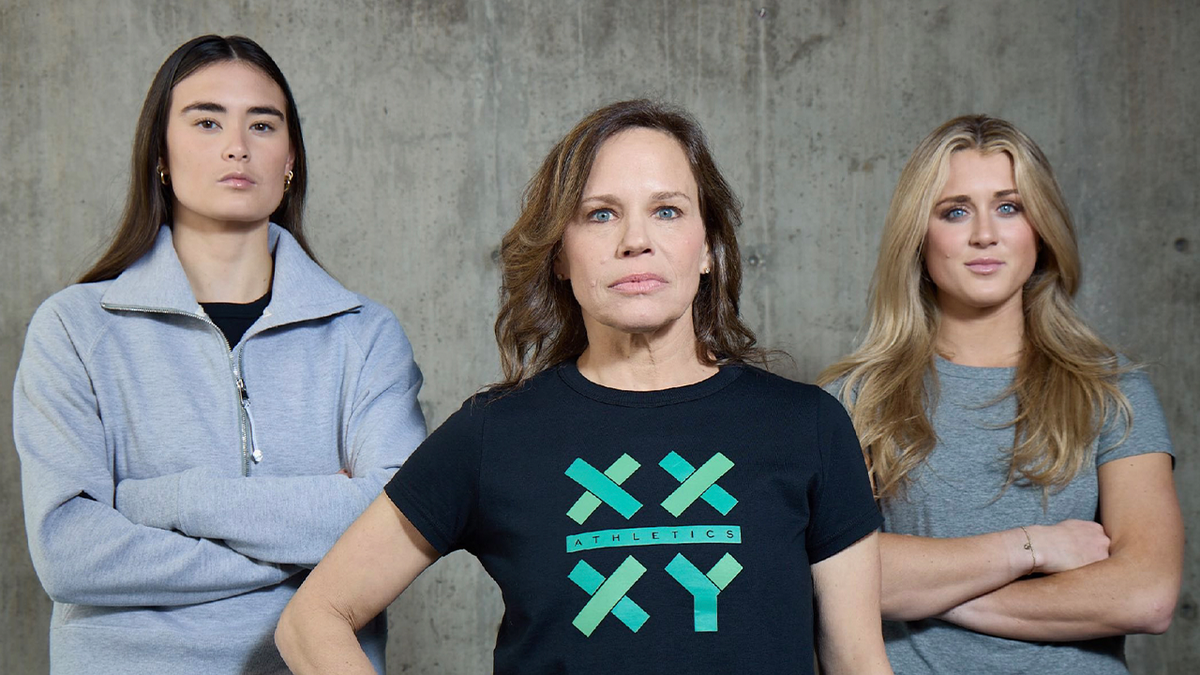
Sey pointed to the 23 states without laws protecting girls’ sports and said girls in those states remain exposed.
“Girls in every ZIP code deserve fair sports,” Sey said. “My daughter is nine, and we live in Colorado. That is a blue state that does not have a law on the books protecting women’s sports. Hopefully, it will soon.”
Sey said she is chairing a Colorado ballot initiative that she expects to appear before voters in November. But she said the broader fight is cultural, not just legal.
“It should be absolutely unacceptable to every human, every parent, that a boy would be fielded in a girls’ category,” Sey said. “When that becomes culturally unacceptable, that’s when it will stop happening.”
Gaines said the next phase will require Congress, states, federal agencies and parents to act.
“We need Congress to codify President Trump’s executive orders,” Gaines said. “We need states, whether it’s through legislation, although I think we’re kind of reaching the cap there, so through ballot initiatives at this point.”
She also called for “real enforcement mechanisms” against states and institutions that refuse to comply.
“I think that’s what is gonna make any of these people move, is when you hit them where it hurts, which is always going to be the pockets,” Gaines said. “Whether you’re a corporation, whether you’re a government entity, doesn’t matter.”
Sey said the ruling also had implications beyond school sports. Title IX, she noted, does not govern every arena where female athletes compete.
“Title IX doesn’t actually cover the Olympic movement. It doesn’t actually cover private club sports,” Sey said. “The Boston Marathon has its own governance. Men can compete in the women’s category in the Boston Marathon.”
“So there’s still a lot of work to do,” she added. “It’s why I keep saying we have to focus on changing the culture, because I think once we do that, all of the governing bodies will fall in line and protect the women’s category.”
CLICK HERE TO DOWNLOAD THE FOX NEWS APP
As Gaines continues to lead the charge on the issue, she doesn’t envision the finish line existing in a courtroom or piece of legislation, but in a broader cultural influence.
“When people, your everyday person, so think of parents, coaches, et cetera, when they’re bold enough to defend their daughters or defend their athletes or defend themselves,” Gaines said. “That’s when you see real change.”
Read the full article here
