



NEWYou can now listen to Fox News articles!
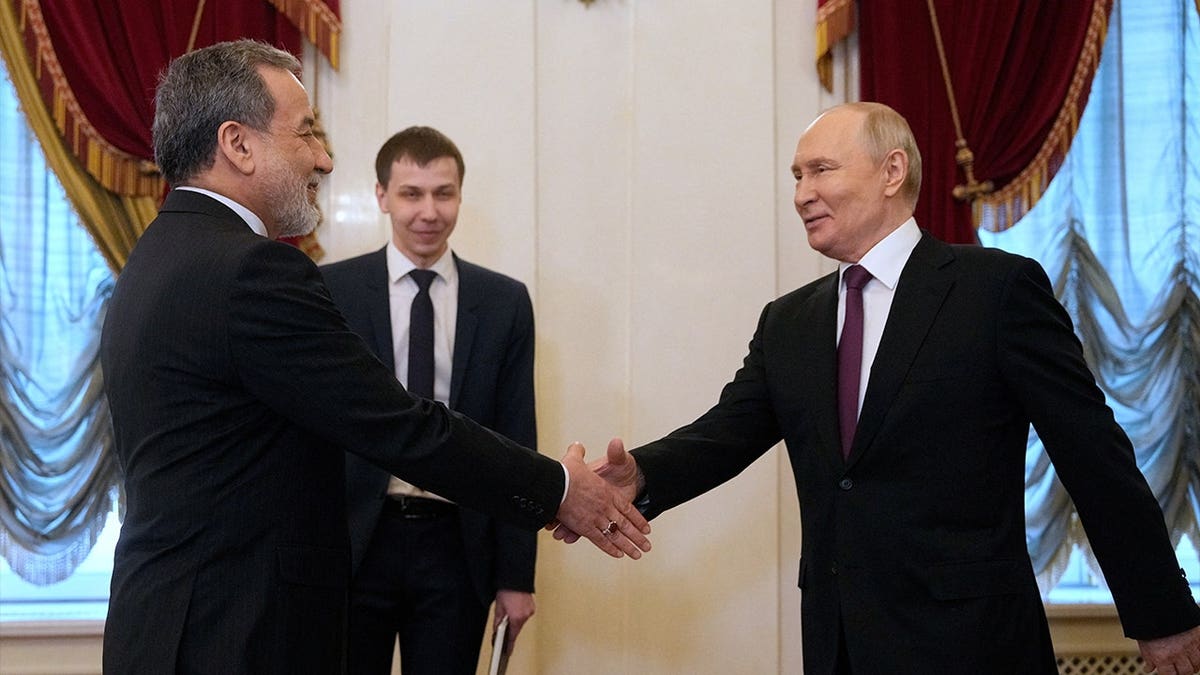
Iran’s foreign minister met with Russian President Vladimir Putin Monday as U.S.–Iran negotiations appeared to collapse, raising the risk of further escalation in the Strait of Hormuz — a critical global oil choke point.
Abbas Araghchi arrived in Moscow for talks with Putin as diplomatic efforts to end the conflict between Iran and Washington remain stalled.
“We see how courageously and heroically the people of Iran are fighting for their independence, for their sovereignty,” Putin said at the meeting in St. Petersburg, according to Russian state news agencies.
“The significance of this conversation is hard to overestimate in terms of how the situation around Iran and in the Middle East is developing,” Kremlin spokesperson Dmitry Peskov told reporters earlier.
RUSSIA, CHINA VETO UN RESOLUTION AIMED AT REOPENING STRAIT OF HORMUZ, HOURS BEFORE TRUMP DEADLINE
The visit comes just days after Araghchi held talks with Pakistani mediators, where he said Iran had shared its position on ending the war but questioned whether the U.S. was “truly serious about diplomacy.”
President Donald Trump has pushed back sharply on that characterization, signaling Washington believes it holds the advantage.
The meeting comes at a pivotal moment, as tensions at sea intensify and scrutiny grows over Russia’s role following reports Moscow may have shared intelligence with Tehran during the conflict.
War Secretary Pete Hegseth warned in March that Russia “should not be involved” in the escalating war, as reports emerged suggesting Moscow may be providing intelligence to Iran on U.S. military positions in the region.
U.S. officials say they are closely tracking any potential intelligence-sharing between Russia and Iran, while downplaying the confirmed operational impact. Still, the possibility of Russian support — whether through intelligence, technology transfers or other assistance — has raised concerns that Moscow could indirectly influence the battlefield without committing forces.
Araghchi has acknowledged that Russia is assisting Iran “in many different directions,” though he has not publicly detailed the scope of that cooperation.
Russia has positioned itself as a potential mediator in the conflict, offering to help restore calm following U.S. and Israeli strikes on Iran — actions Moscow has publicly condemned.
The Kremlin has also proposed storing Iran’s enriched uranium as part of a potential effort to ease tensions, though the U.S. has not taken up the offer.
The outreach comes as ties between Moscow and Tehran have deepened in recent years. Iran last year finalized a 20-year strategic partnership agreement with Russia, which is building two additional nuclear reactors at Iran’s Bushehr facility — the country’s only nuclear power plant.
At the same time, Iran has supported Russia’s war effort in Ukraine, supplying Shahed drones that Moscow has used in strikes against Ukrainian targets.
The visit also follows diplomatic efforts over the weekend, when Araghchi met with Pakistani mediators and said Iran had shared its position on ending the war but questioned whether the U.S. was “truly serious about diplomacy.”
President Donald Trump has pushed back sharply on that characterization, signaling Washington believes it holds the advantage.
“If they want to talk, all they have to do is call,” Trump said over the weekend, adding that the U.S. has “all the cards.”
Trump has also pointed to what he described as “tremendous infighting and confusion” within Iran’s leadership, arguing Iran is under internal pressure as the conflict drags on.
The president canceled a planned trip by special envoy Steve Witkoff and adviser Jared Kushner to Pakistan, where they had been expected to participate in mediated talks with Iranian officials.
Trump said the trip would have been a waste of time, arguing there was no reason for U.S. officials to make an 18-hour flight when negotiations could take place remotely.
Both sides have since traded blame for the breakdown in talks, with Iran accusing the U.S. of making “excessive demands,” while the Trump administration has insisted Tehran must return to negotiations on U.S. terms.
Attempts at mediation, including efforts in Pakistan, have failed to produce progress, with both sides refusing to compromise on core issues such as Iran’s nuclear program and control of the Strait of Hormuz.
As diplomacy falters, the confrontation has increasingly shifted to the water.
The U.S. has enforced a naval blockade targeting Iranian shipping, while Iran has restricted and at times threatened traffic through the Strait of Hormuz, triggering a high-stakes standoff over one of the world’s most vital energy corridors.
Roughly one-fifth of global oil supply passes through the narrow waterway, making disruptions there a direct threat to global markets.
TRUMP SEEKS WARSHIPS FROM OTHER COUNTRIES TO HELP SECURE STRAIT OF HORMUZ
Oil prices already have risen as tensions escalate and shipping traffic declines amid uncertainty over whether the strait will remain fully open.
Iran has floated a potential off-ramp, proposing to reopen the strait if the U.S. lifts its blockade and agrees to defer nuclear negotiations — a framework the Trump administration has shown little willingness to accept.
At the same time, Iran’s outreach to Moscow is drawing renewed scrutiny over Russia’s role in the conflict.
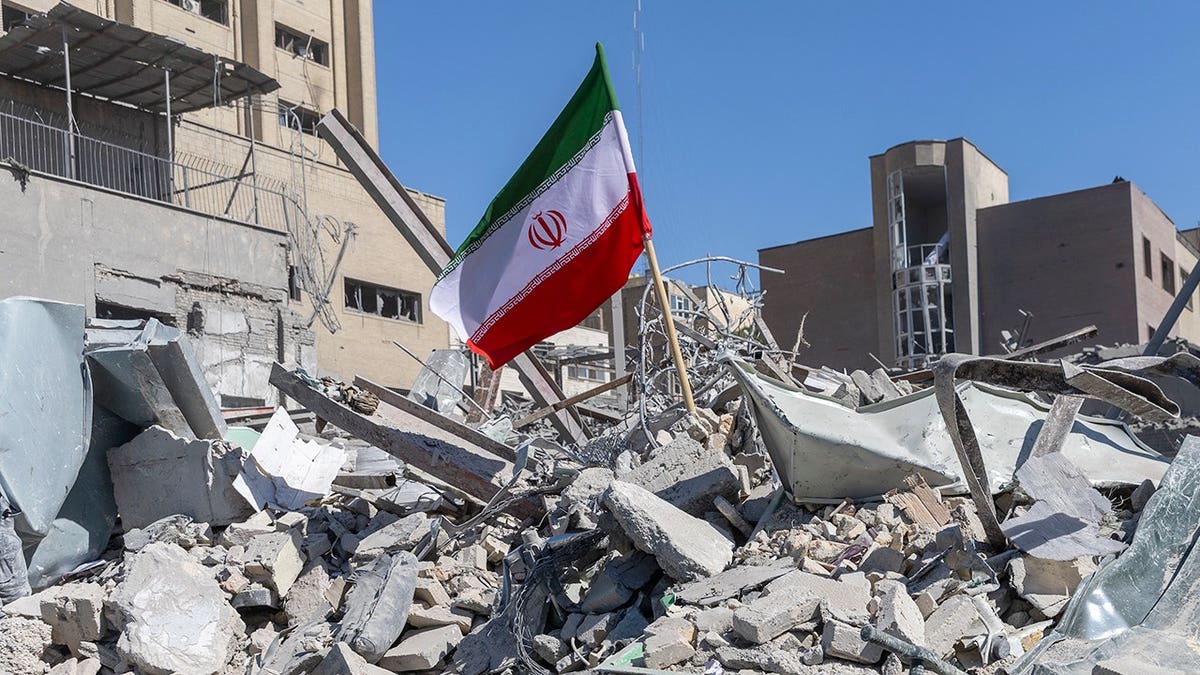
Araghchi has acknowledged that Russia is assisting Iran “in many different directions,” though he has not publicly detailed the scope of that cooperation.
The meeting with Putin now signals Iran may be seeking to deepen that relationship as leverage — or as an alternative diplomatic channel — as direct talks with Washington falter.
CLICK HERE TO DOWNLOAD THE FOX NEWS APP
With both sides dug in and pressure building at sea, the conflict is increasingly defined by a three-way dynamic: stalled diplomacy, rising military risk in the Strait of Hormuz and the growing question of how far Russia is willing to align itself with Iran.
Analysts warn that without a breakthrough, the standoff risks sliding further toward a broader confrontation — with global economic consequences tied directly to the fate of the world’s most important oil transit route.
Fox News Digital has reached out to the Iranian mission to the United Nations, the Russian embassy and the White House for comment.
Read the full article here
