


NEWYou can now listen to Fox News articles!
Stroke incidence more than doubled among young adults in a recent study.
Researchers at the University of Cincinnati analyzed data from 2,076 first-ever strokes among adults ages 20–54 in the Greater Cincinnati/Northern Kentucky region from 1993-1994 to 2020.
Over those three decades, the incidence increased from about 34 to 62 strokes per 100,000 people per year.
HEART ATTACKS AND STROKES RISING WITH EXTREME WEATHER EVENTS, RESEARCH SUGGESTS
The increase was primarily driven by ischemic stroke, which occurs when a blood vessel supplying the brain becomes blocked.
Among the younger adults who experienced strokes, there was an increase in hypertension, diabetes, atrial fibrillation (irregular heartbeat) and substance use.
“This has major implications, since young people who develop disability from a stroke may no longer be able to work or provide for their families,” study co-author David J. Robinson, M.D., an assistant professor of clinical neurology and rehabilitation medicine at the University of Cincinnati College of Medicine, told Fox News Digital.
“We don’t know for sure why strokes are becoming more common, and we really need to study this in more depth if we are going to reverse this trend.”
8 COMMON FOOD PRESERVATIVES LINKED TO HIGHER RISK OF HIGH BLOOD PRESSURE AND HEART DISEASE
There was also a sharp increase in documented substance use, which rose from 4.6% to 40.2% in the study period, primarily marijuana.
“It’s hard to say whether this is responsible for any of the rise in stroke; there is a relationship between marijuana use and stroke, but most of the evidence is with heavier use,” Robinson said. “The relationship between marijuana use and cardiovascular disease needs more study so that we can properly advise our patients.”

In contrast to younger adults, stroke rates declined among older adults, falling from about 619 to 453 strokes per 100,000 people per year.
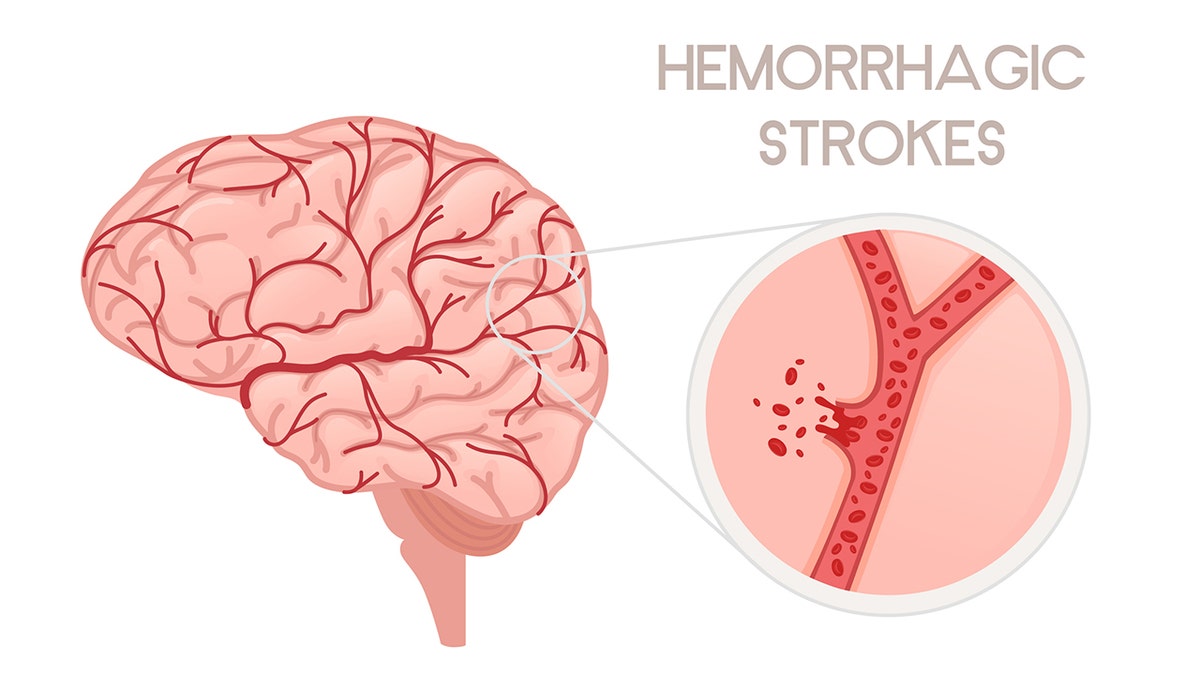
Short-term survival after stroke also improved, the researchers found. The share of younger adults who died within 30 days of a stroke declined from 11.7% to 9.4% – primarily for bleeding-related strokes, including intracerebral and subarachnoid hemorrhages.
WHAT TO DO IF SOMEONE IS HAVING A STROKE, AFTER JILL BIDEN REVEALED DEBATE-NIGHT FEARS
“Our study might provide evidence that we have gotten better at treating people who have hemorrhagic strokes and helping them survive, which is encouraging,” said Robinson. “Still, prevention is the most important thing to focus on, because just surviving a stroke doesn’t mean you aren’t left without disability.”
The findings were published in the journal Neurology on Sept. 23.
‘Uncommon, not zero risk’
Dr. Jason A. Gluck, vice chair of the Heart & Vascular Institute and system chief of cardiology at AtlantiCare in New Jersey, noted that while stroke is still uncommon in young adults, that doesn’t mean they have zero risk.
“The concerning findings in this particular trial is that stroke rates are moving in the wrong direction for the younger population,” Gluck, who was not involved in the research, told Fox News Digital.
“While many of the risk factors are things that we can identify and treat before a stroke occurs, when you’re young, sometimes you don’t know about it – so awareness is key.”
Risk factors are pervasive across all age groups, the doctor noted.
POPULAR ARTIFICIAL SWEETENER LINKED TO POTENTIALLY DANGEROUS HEART RISK
“The same things that happen to 70-year-olds can happen at 40 – if you have high blood pressure, if you have diabetes, if you’re smoking, if there’s obesity, abnormal cholesterol and activity, all those things can lead to [stroke],” he warned.
“Vascular disease doesn’t suddenly begin when you’re 65; it develops over time.”
Study limitations
The main limitation of the study is that it did not include comparable risk factors for people without stroke.
“We can’t say for sure how many of the stroke risk factors are changing in people without stroke in our region,” Robinson noted. “This makes it really hard to determine what is causing this rising incidence. We will need to look in other studies to really understand the ‘why’ of this trend.”

Also, the findings may have been affected by changes in medical documentation and diagnostic methods over the nearly three decades. One example provided was an increase in MRI use, which could potentially improve the detection of stroke. It was also possible that the rise in substance use was due to increased documentation or disclosure.
The study was also geographically limited, including just five counties in one U.S. state.
“While stroke is still relatively uncommon in younger individuals, it can happen and be really devastating,” Robinson said.
CLICK HERE FOR MORE HEALTH STORIES
The doctor emphasized that hypertension is the risk factor most tightly associated with stroke.
“Younger people may not have a lot of opportunities to get their blood pressure and other risk factors screened, and we need to come up with solutions that can meet them where they are,” he said.
TEST YOURSELF WITH OUR LATEST LIFESTYLE QUIZ
Robinson recommended using the American Heart Association’s “Life’s Essential 8,” which is a checklist for optimizing your cardiovascular health.
“It includes blood pressure control along with eating better, being less sedentary, quitting any tobacco products, sleeping well, managing your weight, controlling cholesterol and managing blood sugar.”
Gluck recommends using the “BE FAST” guide to determine whether someone may be having a stroke, as follows.
- B: Balance suddenly off
- E: Eyes or vision change, where you suddenly can’t see the way normally can
- F: Facial drooping
- A: Arm weakness
- S: Speech difficulty
- T: Time to call 911
CLICK HERE TO DOWNLOAD THE FOX NEWS APP
“If you’re having these symptoms or your loved one is having these symptoms, don’t drive yourself to the hospital,” he advised. “Call 911. Be fast.”
Read the full article here
